Showing posts sorted by relevance for query teach the free man. Sort by date Show all posts

Friday, November 4, 2011

“One’s destination is never a place, but a new way of seeing things.” – Henry Miller

I always loved to travel. I was the woman, after all, who at age 29 had moved to Japan to teach; the woman who traveled by myself from Japan to Korea, and later throughout Italy and Spain. And I loved road trips. Ever since I got my driver’s license at 16, it was nothing for me to drive six, seven, eight hours—from the Bay Area down to L.A., from the foothills up into the Sierra Nevada, from Northern California to Portland or Ashland.

My parents had fostered the love of travel in me and my sisters. As a family, we’d taken road adventures, camping excursions, trips to the homes of friends who lived in various states, trips to Disneyland and Mexico, a cruise of the Caribbean. As a kid, I felt a palpable sense of freedom in traveling, and the sense of time and place took on a completely different sense and scope. And then there was the feeling of returning home—refreshed, and looking at the familiar with new eyes.

As much as I loved exploration, by the time I was in my mid-twenties I had done more fantasizing about traveling than actual traveling itself. I had jumped right from high school into college, and every summer I held a job waitressing, or working as a camp counselor, or as a lifeguard. While in college, I had fantasized about taking trains through Europe but ended up married right out of college. I decided that the ideal honeymoon would be to go to a place my parents loved, that I’d heard a lot about, but had never been to: Hawaii. The island of Kauai. My fiancée wasn’t as excited about the notion as I was, but he didn’t have a stellar alternative, so he succumbed.

My new husband was a 27-year-old man who was a private pilot but had flown and been a passenger on only small planes; he’d never been on an airliner until the day after our wedding. Inspired by some marriage movie fantasy, I wore a blue and white sun dress and a wide-brimmed hat on the plane. I imagined us in a From Here to Eternity embrace on a beach—and inspired by my parents’ stories of the elegance of island hotels, pictured us on the lanai of our condo, feeding each other macadamia nuts and pineapple slices, followed by champagne.

But it turned out he didn’t especially like macadamia nuts, and beer was his beverage of choice. He didn’t like to lie down on the sand (too scratchy; got in all his cracks and crevices), and we hadn’t brought the right shoes for trekking over lava. He was a scuba diver, but snorkeling captured his attention for only a short period of time. Hiking didn’t appeal to him, and he vetoed my suggestion that we rent horses for a romantic ride on the beach because it was too expensive. Taking a helicopter ride in Waimea Canyon was also out because didn’t I know that helicopters are the most dangerous, unstable air vehicle? In fact, hadn’t a copter full of tourists crashed just last year?

The whole Kauai scene he found, and I use his word, “boring.” This off-hand critique of what I’d imagined would be the most romantic adventure ever was made worse by the fact that he hadn’t like flying on the commercial airliner. He’d squirmed for most of the five-hour flight, white-faced. And his anxiety about having to cross the Pacific again on the return flight kept him on edge most of our honeymoon week. When he flew small planes, he was in control. But, he said, in a jet that he himself wasn’t flying there was so much that could go wrong.

He hated being the one not in control. I was only 22 so perhaps I can forgive myself for not predicting the doom of our marriage. I can forgive myself for not being able to set my own boundaries. See, there was something about being with a “man in control” that had appealed to me. I’d been a crazy party girl before meeting him, and I’d been attracted to him as a stabilizing force. Of course what attracts us to a person—if the attraction is borne from a need for completion—is often what we end up resenting later. Initially I loved his “stability.” It felt like it balanced out my folly. Later I resented his “stuck-in-the-mud-ishness” and decided I was too Bohemian for that type of marriage.

Something else happened to me on my honeymoon. Something that Monday Morning Psychoanalyzing makes evident. I began to develop claustrophobia. Everything manifests in some way, and my feeling trapped and suffocated was virtually a literal response to my life choices. Certainly I had an ambivalent relationship with that marriage. The battle that raged in me was this: Security versus Freedom. I recall now that I’d never been afraid of flying but seeing my new husband next to me on the flight home drinking beer after beer to calm his nerves—and having his words echo in my head about all the things that could go wrong—unsettled me to the core. If Mr. Stability was unstable about this flying thing, then I certainly needed to fear it. He knew all about planes. He knew this flight from Hawaii to California on this big, unwieldy jet wasn’t safe, was to be feared. I swallowed his belief system like an addict swallows whatever pills she’s handed.

Suddenly I was breathing shallowly. I thought about the doors of the plane, how they’d been hauled shut and locked down, how I couldn’t get out if I wanted to. I gripped the armrest. I tried to channel the blasé attitudes of the flight attendants who walked the aisles as though the floor of this plane were firmly settled on the ground.

That was the first and last flight I took with my husband. The marriage lasted five years. Because he worked (on the ground) for an airline, we could fly free. But we never did. And then, when we separated, I realized I had one last chance to fly somewhere free before the divorce was final and I’d lose my free flying privileges.

I decided on Hawaii. I wanted to experience it by myself, to see if I could enjoy it alone and love what I’d fantasized was wonderful it. I would ride a horse on the beach. I would dig my toes in the sand. I would snorkel for hours and hike a volcano. I began to think of the trip as my anti-honeymoon. I was 27 years old.

I could get off work for only a few days, so I decided to fly to Oahu, the easiest island to get to with a direct flight out of San Francisco. In my carry-on, I packed a couple pairs of shorts and a bathing suit and running shoes, and wore a casual sundress with sandals (no wide-brimmed hat). I didn’t have a hotel reservation; in my new Bohemian attitude, I surmised I’d figure out where to stay when I got there. I was traveling as light as possible—nothing I had to do except step on the plane, alone. Yet I felt oddly heavy with remnants of fear: Could I really do this all by myself?

When the doors of the plane shut, a thread of anxiety zipped up my spine. My pulse ticked up a few beats. I was irritated with myself for the way my claustrophobia had worsened over the past few years. It was to the point where I could hardly sit in the back seat of a car that had only two doors; I didn’t like to be in the center of a row in a movie theater; I panicked in large crowds. I took a deep breath. The overweight man next to me was hogging the armrest, and a bit of his flesh overflowed into my space. No matter how I leaned, I couldn’t quite get away from his touch. I kept focusing on the fact that I was now free. I could make my own life decisions. That helped me breathe more easily. The divorce was my decision. I had outgrown a marriage that felt like it was prematurely making me old. I thought of my husband as 30-going-on-50—and if I didn’t escape I’d be old at 27. He wore white button-down shirts to work every day, which I ironed. All the cooking and grocery shopping were my responsibility. He could spend money however he liked without consulting me, but if I wanted to buy anything, we had to negotiate it. He was an aficionado of World War II and collected old bomber jackets, and books and movies of the time. He loved it when I wore dresses with big shoulder pads (ala 1940s movie actresses). How I had I let things come to this? I was a feminist, a lover of adventure and risk-taking. I had let the part of me that desired stability usurp the urge for freedom in me.

My husband had been devastated when I told him I wanted to break up. He’d not seen it coming, although he had told me months before that he was worried that all the literature I was reading in my graduate program was making me “too idealistic and too optimistic.” He’d felt my urge for freedom blooming. And I blossomed into someone who couldn’t live a June Cleaver life.

The plane began to taxi. It had been cold in the Bay Area that early spring; I reveled in imagining myself basking on a warm beach and tried to ignore the flesh of the man next to me pressing into mine, as well as my own creepy feeling that I couldn’t escape this plane. As the aircraft lifted, the blue bay appeared below us. The whole planeload of people tilted back, the plane pushing hard, fighting gravity.

We were about 6,000 feet up when liquid started to pour out of the ceiling of the airplane on the people in the seats spanning five-across in the middle of the plane. It was a clear liquid, no smell. Passengers being rained upon jumped out of their seats, panicked. I watched, oddly detached, as people struggled out of their seats and staggered down the aisles on the floor angled in its ascending position. Some screamed; some cried; some stood there in shock. Flight attendants appeared, throwing blankets over the wet seats, encouraging people to calm down.

After having cultivated a fear of flying and claustrophobia for years, I had a reaction to these events I never would have predicted. I became suddenly very, very calm. Relaxed. Accepting. My eyes swept the blue bay, and I wondered if this is how I’d go, by plunging into the water. The press against me of the fat man’s arm flesh morphed from irritating to comforting; I suddenly reveled in the touch of another human being. My breath was the fullest and most relaxed it had been since I’d stepped onto the plane. Maybe the most it had been in months. My husband wasn’t the only one who liked control. I did too. But here I was in a situation over which I had absolutely no control. And I felt the deepest, most profound sense of freedom I’d ever felt in my life. A complete release of resistance.

In a few minutes, the liquid stopped pouring out of the plane. The plane leveled out. Over the loudspeaker, the pilot told us that we were going to have to land back at SFO. We couldn’t land with all this fuel in the tanks so they’d have to jettison the fuel out over the ocean.

“You’ll see what looks like flames shooting out near the wings,” his disembodied voice reported. “Not to worry; that’s just the fuel being released.”

Indeed, for a few moments it looked like we sat on a burning airplane. Even that didn’t raise a sense of worry or resistance in me. Instead, I found I was curious about the process. I wondered how much of the fuel evaporates, and how much ends up in the water. When the plane landed, the passengers clapped. I smiled at the fat man, whose beady eyes gleamed with what looked like relief. Soon I learned two things: First, the liquid had been just water pouring from a broken drinking water line; and second, I wouldn’t be able to get on another plane for ten hours. This would make my trip not viable since I had to be back to work in two days. So I headed back home, accompanied by my carry-on. My body felt oddly light, as though my bones were the weight of a bird’s.

Interesting how sometimes we have to relearn the most important lessons. After that divorce, my claustrophobia virtually disappeared. I spent a year in Japan, riding subways so crowded that my body was like one piece in a jigsaw puzzle, and eating in eighth-floor restaurants so jam-packed that the back of my coat picked up the butter on someone’s table as I squeezed by, and riding in elevators to the 20th floor of buildings where passengers were virtually shoe-horned in around me. With hardly a thought, I took airplanes, trains, taxis; the doors shut, and I was ferried off to my next adventure.

But later in my life, my claustrophobia returned. It crept back into my life during the 15 years of my second marriage. During that time, both my father—and my wife’s mother—developed severe lung diseases. We were involved in intense caregiving for them—and, coincidentally, both of them were on oxygen and had to undergo similar medical regimens. For several years, our lives revolved around this caregiving, and our relationship was wilting. We both developed stress-related physical problems; an EKG showed she had a heart palpitation irregularity, and I had a hard time breathing sometimes and needed to use an inhaler, like my father. What insanity, now that I look back on it. We both felt like we were drowning in caregiving. We deeply inhaled the fear of morality.

My fear of flying and enclosed spaces had returned. I felt like the only thing that would help me regain a feeling of verve, of new life, was travel. I craved an embrace of freedom. I sensed that getting away and trying new things and going with the flow might help heal us both individually and as a couple. She had an ambivalent relationship with traveling; she resisted it. But if I made all the plans, she’d come along and usually have a great time. Afterward she’d say, “Thank you for forcing me.” And we’d smile with self-deprecation at our dynamic. But with her mother ill, she especially resisted leaving. She said she felt bad flaunting her health and ability to travel while her mother was stuck home, sick.

Finally I convinced her to take a trip to Hawaii with me. We had a friend who gave us a great deal on his condo on the Big Island. I did all the research and got her enthused about the opportunities to experience nature: whales and dolphins, volcanoes and rain forests. She loved those things in the abstract—she read a lot of nature books and watched nature TV programs—but had not experienced much of this in the flesh. The only drawback was the water. She was afraid of swimming in the ocean, and she didn’t like bathing suits. I told her we’d find some calm, beautiful beaches where she could wade—and she fashioned a swimming outfit that she could handle: black, mid-thigh lycra shorts and a black tank top. I bought a new one-piece turquoise bathing suit that made me feel something I hadn’t in a long time: Pretty.

Even though we’d been in the depths of the dark season of our relationship, the Hawaii trip was a revelation of light. The air smelled of sweet flowers. The whales spouted with joy. Eight spinner dolphins joined me as I snorkeled, while my wife watched, enthralled, from the shore. We hiked across a steaming crater, and marveled that we stood in a spot where earth was created. Spontaneously, we rented kayaks from a local and paddled the indigo waters. And one day, in her black swim outfit that looked like a man’s 1920s swim gear, she shouted at me from the shore where I sat in the shadow of my straw hat, reading a book. I looked out, and there she was, floating on her back in the glittering water, waving at me and smiling. I grabbed my camera and took shot after shot of her, floating on her back, floating in what she’d thought she’d feared.

After the trip, we fantasized about moving to Hawaii, but those fantasies disappeared, along with the feeling of freedom and reconnection we’d fostered on the trip. Soon we slipped back into our familiar routines, our stale patterns imbued with worry and fear of mortality.

Several years later, I went back to the island of Hawaii by myself. My wife and I were in the throes of a legal battle to complete our divorce, a brutal breakup of our 15-year relationship. But as often happens when edifices burn to the ground, I felt the phoenix emerging. I’d been single for a while and was now dating a man I liked a lot. The trip to Hawaii felt like an important step for me—like somehow completing a circle, somehow closing a gap.

That was the first flight I’d taken since the break-up. When the airplane doors closed, to my pleasant surprise, nothing happened to me. I didn’t feel an inkling of claustrophobia. I didn’t feel my usual urge to get off the plane, to beg them to open the door. I just sat, looking out the window, same as I would in my apartment—and when the plane had been in the air for a while, I ordered a small bottle of champagne from the flight attendant. I toasted myself, and dubbed this event my “divorce honeymoon.” I was taking myself on a trip. I didn’t have to convince anyone to come with me. I didn’t have to convince anyone else—or myself—that everything would be okay. I was just being, sipping my champagne, and looking forward to whatever adventures awaited me as I disembarked.

And adventures there were. But the most remarkable one was this: I decided to take a long hike by myself across a volcano, a more arduous trek than I’d ever attempted. I had to do something I’d never done before: get a back-country permit, and take a long hike alone. The hike I chose would take about five hours.

I made a conscious decision. I was going to release all fear. Fear had been my companion for so many years: fear of my parents’ illnesses and deaths, fear of flying, fear of being suffocated literally and figuratively. My whole life I’d regulated many of my actions because of the messages I’d embodied: women are vulnerable, women get attacked and raped, women shouldn’t go places alone. I had done enough in my life—like my experiences in Japan—to counter those fears. But I realized that when I’d done those things, I “felt the fear and did it anyway.” On the flight on the way to Hawaii, I’d viscerally remembered that aborted flight almost twenty years before—and how when I’d thought I might die, how when essentially I’d embraced my mortality, I’d felt no fear. It was as though I no longer fought gravity and the free fall felt like flying. I decided that for this hike, I was going to cultivate that feeling. I wasn’t going to fight fear. I was going to release resistance to life and death so that I could fully live.

That morning there was a light rain in Volcano National Park. At the ranger’s station, the ranger didn’t bat an eye as she issued to me the back-country permit and marked my route on a small map. When I walked outside, the wind had picked up. I pulled my disposable rain poncho from my backpack and donned it over my hiking clothes. I knew that this hike would involve the often disorienting feeling that a volcano can engender because of its monochromatic landscape. You have to keep an eye out for the small cairns placed to mark the path, and sometimes the vertical cairns don’t stand out because everything blends together.

Soon I was alone on a massive rock, like a woman on the moon. Vast craters rose out of nowhere, and the tips of my boots hovered over an abyss. Sulphur-smelling steam misted up from the ground, while rain tapped at my plastic covering. After hours of rock-walking, I descended into a rain forest on a narrow trail, branches tugging at my poncho.

After hours of being alone, I saw walking toward me a man, also bound up in a poncho, a hat shielding his eyes, a man ducking the low branches of the rainforest trees. Out there in pure isolation, one of us would have to turn sideways to let the other pass, and all the warnings about being a woman alone began to beep on my internal radar for a solitary second. But I breathed them away. He caught my eye and moved to the side to let me pass on the narrow trail. He said one word: “Hi.”

Then I saw there was another person, a woman turning the corner following him. They were young. They were probably on their honeymoon. She smiled as she squeezed by me and joined her man on the trail. Soon they disappeared, and I was alone again in the canopy of trees. The rain dwindled to a light drizzle, and streaks of sun pushed through the overhead green, illuminating my way.

*

Postscript: The boyfriend I mentioned here and I have been together almost two years now. He loves Hawaii too, and we plan to go together next summer. Travel continues to remind me to embrace life's journeys, wherever they take me.

Wednesday, June 3, 2009

Shaindel Beers: "Some people fall into alcohol, some people fall into drugs; I fell into poetry."

When you read Shaindel Beers' poetry, it soon becomes clear you are entering a complex, compassionate, smart mind. Beers' book, A Brief History of Time, is described by Salt Publishing as at once an exploration of what it is to grow up in rural America and a treatise for social justice. These poems, many of them award-winning, span a wide range of styles—from plainsong free verse to sestinas to nearly epic works. The characters/speakers in Beers’ poems range from the rural working class to mythological characters. These poems look at the world with an honest, unflinching eye. She is one of the up-and-coming poets from Generation X we will be hearing a great deal from in the future.

"Up and coming" is not just PR blather. As I read her book, I got the sense that I was being introduced to a poet who is doing serious work that will have longevity, a poet who richly incorporates craft and experience.


Please tell us about the genesis of your new book.

I started writing some of these poems quite a while back, maybe even ten years ago, before I ever thought about going to graduate school for creative writing. I always knew I wanted to work in academia and be an English professor, but I assumed I’d go the PhD route and teach British literature at some small, private liberal arts college. You know, the standard dream everyone has when they fall in love with literature. I loved doing my Master of Arts in the Programs of Humanities at the University of Chicago (sort of a design-it-yourself program built around a core course—mine was British literature with some philosophy mixed in), but after that sort of intensity and the exorbitant price tag, I didn’t know how to go on to get a PhD. Luckily, I started adjuncting at a community college and a university, and one of my colleagues invited me to take his creative writing class. I ended up using the work I generated in that class for an application manuscript for grad school for creative writing and then went to Vermont College’s (now Vermont College of Fine Arts) low-residency MFA in Writing program. This book is basically the manuscript I generated there as my creative thesis.

Of course, I kept taking out weaker poems and adding stronger ones in the five years I was sending it out to publishers, but the bulk of it was written during my time at Vermont under the tutelage of my advisors that I had each semester. I couldn’t have asked for a better graduate school or writing experience.


What's the one thing you most want people to know about your book?

I really wanted to write an ambitious first book, and I hope I’ve accomplished that, but it’s one of those things that only time will tell. It’s tempting to get enough “good” poems to put together a first book and start sending it out as soon as you have enough, and I tried not to do that. I chose the poems that are in this collection out of hundreds I’ve written, and a lot of them, I feel, are ambitious poems, and several of them have won awards or honorable mentions in contests. My goal is to do writing that is important, not just good.


A Barbara Walters question: If you were a poem by any writer, which poem would you be and why?

I really think I would be “Do Not Duplicate This Key” by Richard Jackson. It’s brilliant and daring and smart and gorgeous and all kinds of things I’d love to be. Here are the first few lines of it:

It is not commonly understood why my love is so deadly.
At the very least it uproots the trees of your heart.
It interferes with the navigation of airplanes like certain
electronic devices. . . .


Isn’t that great? Who wouldn’t be won over by a love poem like that? And he fits everything in there from Ovid to the Spin Doctors (as in the 1990s band) to war in Sarajevo. Another favorite part is:

… Even the skeptic,
David Hume, 1711-1776, begins to believe in my love.
My own steps have long since abandoned their tracks.
My own love is not a key that can be duplicated.
It knocks at the door of the speakeasy in Sarajevo
and whispers the right word to a girl named Tatayana.

It’s just a beautiful, beautiful poem, and it sustains itself for three pages, which shouldn’t be considered long but is, in the poetry world these days.


Why do you write poetry?

I think I do it because I have to. Some people fall into alcohol, some people fall into drugs; I fell into poetry. It really just seemed to be my natural response to the world around me; I can’t even explain it. When I was a little kid. Little. I don’t know what age, I used to try to make up songs when something was happy or sad or upsetting, and then I think the music part of that fell away. I guess it was too much to try to plunk out the tune on a piano and then write out the notes on staff paper. If I wrote poetry, I really just needed paper and (back then) a pencil. I still think it’s the cheapest, most accessible art form to take part in. You really just need a notebook and a pen, and you’re all set.

The first time I can remember a poem being my initial response to something happening was in elementary school, my cousin shot my dog. I heard about it after school; someone told my sister about it, and she told me. I was devastated, and I wrote a poem that had a definite stanza structure with a refrain. If I remember correctly, I had a drawing that went with it. Poetry is sort of how I deal with everything—a good day, a bad day, a beautiful sight, and so on.


Do you think teaching is a good complement to writing--or does it just get in the way?

I think that the teaching itself and the interaction with students is wonderfully invigorating for writing. I said in an earlier interview that I learn so much from my students, I even thank them in the acknowledgments section of my book because they are so inspiring. I think that the massive amounts of grading that most instructors have to do for their jobs is what is prohibitive. There are those lucky souls who have a 3/2 course load; I am not one of them. I teach five courses a quarter on the quarter system, so fifteen regular courses a year, and I elect to teach two six-week summer courses for extra pay.

If you’re a writer, though, you make yourself write whenever you can. I know writers who get up at three in the morning every day to write for two hours before “the real world” intrudes, and another who teaches full-time and writes like crazy for the entire month of May and revises the rest of the year. Each person just has to figure out what works for him or her.


Do you believe all poetry is political--or just some poems?

I believe all poetry is political. First of all, you’re expressing that you’re literate if you’re doing something in writing, and you’re showing that you have leisure time (of some sort) during which to write, and if you’re intending to be read by others, that what you’re saying is important enough to be put down on paper and passed on. These are all political acts. Of course, getting out of bed and going to work is one sort of political act, and refusing to get out of bed and go to work is another. I guess I’m one of those cultural theorists. The ones your mother warned you about.

Please share with us one poem from the collection, and then riff a little about the journey the poem takes the reader on.

I think I’ll use “A Man Walks Into a Bar”:

A Man Walks Into a Bar

He was tall, well-built, blue-eyed,
a guy most girls would want to take to bed.
Then he reached for the beer with his left hand,
revealing the stump of his right.

We could tell the second he knew that we knew.
We’d smile, but the smile wouldn’t travel
all the way to our eyes. He’d turn back to the bar,
fold his arm closer so that we could
no longer see

as we rushed off to sling beers for guys
not as good-looking but more whole,
the ones who leered lecherously,
on “Short-Shorts Night”
and left ten dollar tips for two dollar beers

always expecting more, always bitter when we didn’t deliver.
The quiet one, we wounded week after week, a guy
any of us would have considered “out of our league,”
“a long shot,” if he had been unbroken,

the sad, blond man we were afraid to love.


--
I worked in this sports bar the summer before my last year of undergrad, and it was like another planet. It was this bustling, rowdy place that seated something like 360 diners, and it had a TV on nearly every imaginable surface—even in the bathrooms. I used to have to know how many TVs in case a customer asked, but I don’t remember now. I want to say 81 TVs. But it was really this sad place a lot of the time; people would lie and say they had tickets to be somewhere important and get us to put a rush order on their ticket, and then they would spend over an hour there; this one lonely obese man would come in and sit in the same attractive server’s section each day and order a gigantic meal and then a caramel apple sundae for dessert (and we felt like we were helping to kill him by giving him all this food), and all kinds of pathetic, drunken loneliness.

The above poem is one of those instances that I felt bad about taking part in. I wanted to start out with the standard line to a joke, “A Man Walks into a Bar” because I think we generally think of bars as a happy place, but a lot of people are there to escape and forget their troubles, and it’s doubly sad when they are wounded there, too. So, we have the expectations of the servers seeing this attractive man, and then that acknowledgment when “he knows that they know.”

Nancy Mairs has an essay about how the reason for our discomfort with the disabled is because we realize that it’s the one minority we can become a part of at any time, and looking back at how I was when I was twenty-one, it makes sense. There was something really scary about seeing this man who was beautiful, and then noticing his missing arm. But, somehow, it’s still too much in the poem, and I have to keep up with the pace of the sports bar and rush off, serving more beer, but I mean the poem as an apology and to show (I hope) that I’ve grown in the last ten years since I was a server at a sports bar. I hope I’m a better person and that I would treat this man differently today, and I hope that life is being good to him now, wherever he is.

Anything else you'd like to add?

I’d like to thank everyone for following along on this virtual book tour and all of the interviewers; it’s been fabulous.

I’m doing a book giveaway on Goodreads.com that I would love for your readers to enter. In honor of my book’s half birthday, I’m giving away six free copies; one for each month the book’s been out. And if people message me on Goodreads that they’ve entered the drawing but didn’t win, I’ll sell them a book for the cover price, but I’ll cover the shipping for them (US only).

Of course, everyone can find me on Facebook; you can never have too many friends in the writing world!

*

To watch Shaindel read two poems at the Northwest Poets Concord, click here for "Clean" and here for "The Last Ballet Class Before the Operation."

Friday, January 15, 2010

Fun with Syllabi ... and creative ways to help Haiti

Now is the season for syllabus-crunching. Designing a semester course is dizzying, made more so this academic year due to the weirdness that is furloughs. Because we had to take an almost 10% pay cut this year, we are also required to cut out a certain number of days from our semester. Some of the required days are university-wide furlough days. Others are ones we must designate ourselves, which means students may have some classes that meet on a given day, while others won't. For students taking several classes, the calendar contortions are mind-blowing.

On furlough days we are by contract forbidden from grading papers, emailing students, etc.--in other words, doing any work. It's like University Shabbat. But the bottom line is we are not to compromise any of our teaching and learning objectives. How do you cut out teaching and learning time without compromising anything? It's Kafka-esque.

Still, I'm grateful that my job affords so much creativity. This semester the travel writer Tim Cahill will be our Lurie Endowed Professor. He'll be teaching two classes, and giving a free talk open to the public. So a number of us have decided to focus our courses on travel and "the journey." Here's my run-down:

COURSE #1: English 117, Section 03 (Literature and Film: Travel and Transformative Journeys)
In this class, we will read books and then watch the film adaptations.

1. The Wonderful Wizard of Oz (by Frank Baum)
2. The Grapes of Wrath (by John Steinbeck)
3. Up in the Air (by Walter Kirn)
4. Orlando (by Virginia Woolf)
5. The Lone Ranger and Tonto Fistfight in Heaven (by Sherman Alexie) [Film is Smoke Signals]
6. The Road (by Cormac McCarthy)
7. Sideways (by Rex Pickett)

Course #2: English 130, Section 02 (Fiction Writing)
In addition to workshopping student stories, we will study the writing of fiction writers who will give readings on campus this semester. These readings are free and open to the public.

1. Revenge of the Mooncake Vixen (by Marilyn Chin)
2. War by Candlelight (by Daniel Alarcon)
3. Teach the Free Man (by Peter Malae)
4. Works by the current Steinbeck Fellows

Course #3: English 1A
1. The Best American Travel Writing (Eds. Wilson & Cahill)
2. Online Handbook
3. Reader comprised of works by Chin, Alarcon & Malae, as well as the Steinbeck Fellows

*

I am grateful to say that the reviews of Complementary Colors that have been coming out have been wonderful. I don't know why I'm surprised that people seem to love it even more than For the May Queen. Perhaps because Complementary Colors is about a straight woman's journey into loving a woman. I figured that wouldn't be to everyone's taste. But someone wrote on Goodreads that she normally wouldn't read a book on this topic but she was glad she did. That is thrilling to me!

*

We've had a few earthquakes here in the last couple of weeks, but of course they have been nothing compared to what has happened in Haiti. The pictures coming out of that world are apocalyptic. I know a lot of people want to help even though this is a terribly rough time financially for so many. My sister Ann is involved in a creative solution. She has put for auction on eBay one of the purses she knitted, and the proceeds will go to disaster relief in Haiti. Anyone can do this. So you may not have money to give, but perhaps you have items to sell.

Saturday, April 5, 2008

Good vs. Good and Adaptations

Peter Nathaniel Malae, author of Teach the Free Man, came to speak to my students about writing.

He said that when writing, what's most important is that you stay true to the vision of the story. And that the great stories are about the "human heart in conflict with itself." (I like this. It reminds me of Tolstoy's famous comment that the greatest stories aren't good vs. evil but good vs. good.)

Peter is one of five finalists for the New York Public Library's Young Lion Prize, which is given to authors ages 35 or under. The otherfinalists are:

Ron Currie, Jr., God Is Dead

Ellen Litman, The Last Chicken in America

Dinaw Mengestu, The Beautiful Things That Heaven Bears

Emily Mitchell, The Last Summer of the World

I'd love to read all of these. So much to read, so little time...But right now I'm focusing on a big old fat biography of Auden (research for my historical novel).

I just finished Elegy for Iris by John Bayley, which is about his wife Iris Murdoch and her descent into Alzheimer's. Damn he loved her, a fierce and admiring love. A wonderful book--funny and moving and raw and intelligent. Much better than the film based on the book, Iris.

I also read "The Bear Came Over the Mountain," the Alice Munro story that was the basis for the film Away from Her. The film is surprisingly close in style and substance to the story. I think that in general stories make for better film adaptations because with novels so much has to be cut out. It's intriguing to see how a writer's style can be conveyed visually through film images, color, camera movement, and so on.

Sunday, March 16, 2008

Beach and Teach

Took a long Santa Cruz beach walk today. Sure feels like spring...which, by the way, is just three days away.

Am re-reading Peter Nathaniel Malae's story collection Teach the Free Man, since I'm teaching it in my fiction writing class. Peter (who is currently a Steinbeck Fellow on campus)will be visiting my class to talk to my students about writing.

Peter's a force of nature. He's intense. He writes every day from midnight to 4 a.m., or something like that (I'll get the details when he comes to class, I'm sure). He's now working on his second novel, while the first is being seriously considered by a big publisher.

As I was re-reading the stories, I found myself getting tense, even though I'd read them before and knew what happens. He's excellent at building tension through crafting a creeping-up of external and internal conflict.

All of these stories center on California prison inmates or parolees. In the first story, "Turning Point" (which originally appeared in Cimarron Review), you can feel the painful contrast between the outside world and what's going on inside the main character's head. The whole thing simmers, and you're just waiting for the explosion. Fitting, given that violence is integral to prison life.


Monday, January 27, 2025

Repositioning Cruise from Europe to S. America


our route


For years I'd heard about "repositioning cruises," when a ship is relocated from one part of the world to another. A lot of full-time travelers use them to avoid long flights and jet lag, to enjoy a variety of ports, and to save money. Repo cruises tend to cost about the same as a long-haul flight, with two or more weeks of food, accommodation, and entertainment thrown in.

Chris Englert and Steve Goodfriend, who found the Nomad Life group, told us they planned to travel from Europe to S. America this way in December 2024. This couple has embraced being nomadic and minimalistic for four years, traveling the world full-time with mere carry-ons. They share resources and strategies in their website, You Tube channel, and books.

Dave and I were enticed, as were 15 others, to join them on the Norwegian Star. I'd yet to meet Chris in person, but we had a history of giving each other feedback on our manuscripts. Her blurb appears on the cover of Wanderland.


Tavira Castle was built in the 10th c. by the Moors


Dave and I picked up Chris and Steve in our rental car in the Algarve for the drive to Lisbon, the port of embarkation. When we finally came together in real life, it felt like hugging old friends.

Dave and I had circled back to Portugal after a month in Spain. I adored the seaside village of Tavira, with the idyllic River Gilao running through the town. With its gorgeous architecture, it has the aesthetic of a mini Paris. There, and in the the nearby adorable town of Cabanas, we took ferries to the barrier islands, peaceful places with long beaches and little eateries.

This enjoyment was hard earned after the drama we'd been dealing with, First, I'd had to go to the doctor who administered a shot of cortisone to relieve my ghoulishly swollen eyes due to some kind of allergic reaction. Next, we'd had to change accommodations because of loud and maybe drugged-out neighbors.


monk skulls

And then...our rental car was keyed. We'd parked in a public lot in Faro so we could gawk at the eerie site of over a thousand monk skeletons in the Capel dos Ossos (Bone Chapel). When we returned, we discovered scratches all the way down the driver's side. Soon we learned that the insurance would not cover such damage. I was sure we were screwed out of $1,000 but then thought to call Capital One Visa who assured us such coverage was a card benefit. We sent in a tidal wave of paperwork and are hoping we'll be reimbursed.


Cabanas Island ferry


What a relief when we got the car out of our hands and checked into a Lisbon hotel in the Alfama district where we spent one night, close enough to walk to the cruise port in the next morning. The streets were lively with musicians, vendors, and art. The next morning at sunrise, the Norwegian Star loomed large and lovely from the overlook. 


Look closely and you can see the ship.

Walking down those steep cobblestone streets with our luggage was tricky, but check-in was easy. In fact, the "cattle call" aspects of cruising were absent our full 17 days. Rarely did we have to wait in a line. The ship docked at each of the seven ports, so we never had to take a tender. And, incredibly, it was smooth sailing the entire time--although my body always felt a bit asway.


Women nomads representing!


Being aboard with a group of friends was super fun. (To see a few of them, including us, check out this video.) It was a vibrant social scene with deliberate and spontaneous gatherings. We ate meals together, watched shows and enjoyed live music, danced, played group trivia and cards and Scrabble, swam in the pool and soaked in the jacuzzis, and walked the decks in the sea air. Every morning Dave and I led yoga sessions. It was like adult summer camp!

At any moment, I could hear various languages being spoken. At least 60 nationalities were represented by guests and staff. At one point, a Japanese man and I struck up a conversation. When I mentioned I was originally from California, he said 45 years ago he'd attended San Jose State University to learn English...the very place I used to teach!

There were several restaurants, but I preferred the choices at the buffet. Dave liked it, too, but as a non-lactose guy he struggled with milk being an ingredient in unlikely dishes, such as Asian and Indian food. When he told a server that he was disappointed at the lack of dairy-free desserts, a manager arranged to have one made for him every day. 

Seasoned cruisers seemed to think the ship was "just okay"--but I liked its design and our room, too, with its comfy bed and window looking out to the passing sea. My only complaints: the jacuzzis could have been hotter and the library bigger. I felt like an excited kid the morning we woke up to the ship trimmed in holiday decor.


Christmassy atrium


I enjoyed each port as well. We didn't use the cruise's excursions, which are convenient but expensive and often crowded. Instead, we either hired our own drivers in town or arranged tours with Airbnb Experiences or Get Your Guide. Other times we took self-guided walks using the GPS My City app.

1. In Funchal, Madeira, a Portuguese archipelago in the North Atlantic, I did a walk with Chris and Steve through the picturesque town and seaside.


Chris & Steve at a pandemic "we will hug again" installation.

the market

cathedral

swimmers


2. At Tenerife in Spain's Canary Islands, Dave and I strolled around downtown Santa Cruz then hired a driver to take us to Mount Teide. This volcano is the highest point above sea level in the island of the Atlantic. We drove up the spine of the mountain range with spectacular views around every bend and emerged above the clouds.


Tenerife market


above the clouds


Dave on the volcano

3. Porto Grande, Cabo Verde, an African island country, sits off Dakar, Senegal. At the port-of-call, Mindelo, we walked around downtown, feeling we could have been in the Caribbean. A guide drove us around the island, which was stark outside the city. At Salamansa Beach, we watched kite boarders against a backdrop of volcanic mountains.


dog and fish


4. After we steamed across the Atlantic in three days, crossing the equator, we pulled up to Recife, Brazil. Near a vast beach swarming with families, Dave, Chris, Steve, and I met up with our guide and hopped on bikes. He led us through various communities, from expensive condo high-rises to poor barrios. We saw the Parque de Esculturas, an impressive and surreal sculpture garden created by Brazilian artis Francisco Brennan as a gift to the city in the year 2000. The main piece among the 100 sculptures is the 105-foot tall Crystal Tower made of clay and bronze.

Next we loaded the bikes onto a ponga to cross the channel to the city center. There, at a bustling street fair, we ran into friends from the boat and had lunch together.


approaching Recife


Parque de Esculturas


Love seeing a city by bike.


5.  At Rio de Janeiro, Brazil, a driver took the four of us to the famous beaches of Copacabana and Ipanema. As in Recife, I was amazed by the art everywhere, especially Escadaria Selaron, a landmark public stairway adorned with colorful hand-painted tiled by artist Jorge Selaron. It was a crowded, happy scene.

Next we ventured into Real Gabinete Portuguese de Leitura, aka Portuguese Reading Room, established in 1837 by immigrants. When Chris and I, two writers and book lovers, walked into this magnificent gothic style building with the largest collection of Portuguese books outside of Europe, we were so affected we hugged each other, teary eyed. 


Olympic-era mural


Chris & me at Copacabana with Clarice Lispector (1920-1977),
Jewish Ukrainian novelist who escaped the pogams in Brazil.


Escadera Selaron


One wall of the amazing reading room

6. Montevideo, Uruguay, was a sweet surprise. This city of 1.4 million has a hippy, Art Deco charm. We saw a plaza dedicated to LGBTQ people, tarot card readers, and street markets selling exquisite vintage items. We wandered into an incredible bookstore, Libreria Puro Verso, in a stunning building erected in 1917. I left wanted to see more of Uruguay one day.


a gem of a bookstore


so welcoming to see Pride flags


vintage


tarot


gorgeous architecture


7. Buenos Aires, Argentina, our last stop. We spent a month there, so my next entry will be all things BA.

I wasn't sure how I'd feel about cruising for so long. At about day 14, I felt ready to sleep on a non-swaying bed. But would I do it again? Yes! And I plan to.


If you're interested in our life of housesitting, budget travel, and living in Mexico, check out my books Wanderland: Living the Traveling Life and Call It Wonder: An Odyssey of Love, Sex, Spirit & Travel.


Saturday, June 10, 2017

Dreaming about a Writing Retreat?


Dream writing spot
I've always dreamed of teaching at an exotic writing retreat. But for some reason my dream wasn't coming true by just sitting around waiting for someone to offer me free round-trip tickets to teach in Bora Bora.

Then I met writer and charismatic Renaissance man Brian Gruber, who happens to live in one of the most beautiful places I've been: the Thai island of Koh Phangan. Brian's the kind of guy who does crazy shit like travelling to Afghanistan, Iraq, Nicaragua (and other locales) without a predetermined itinerary or lodging, serendipitously finding places to stay and people to interview regarding how they feel about the U.S.'s military interventions in their countries. Such brazen actions led to his most recent book, WAR: The Afterparty.

Turned out he, too, had thoughts of running writing retreats--and after a few chats over meals, we set the wheels in motion.

Retreat Hosts
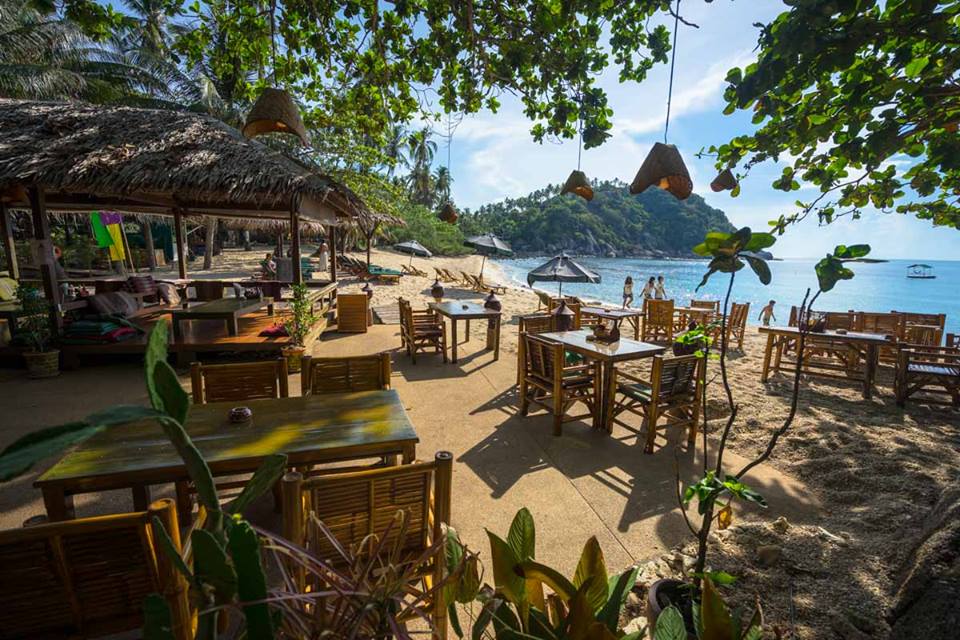
We decided to call it "Write Your Story in Paradise." Yes, "paradise" is a well-worn trope for tropical places, but in this case, it really fits. Check out this drone footage of the island:


Brian was able to score The Sanctuary, the best resort on the island. Think upscale bohemian with private beach, beautiful and unique accommodations, great food, yoga, meditation, and spa.

Lodging includes beautiful outdoor spaces.
And, incredibly, he was able to talk The Sanctuary into offering people 3 extra free nights if they sign up by June 15. That means, writers can arrive September 6 and just enjoy the resort until the workshops begin September 9-15.


Approaching The Sanctuary.

It was important to both of us that the experience be empowering, even transformational. As highlighted in our title ("Tell Your Story in Paradise"), Toni Morrison's words were our guide:

"If there's a book that you want to read but it hasn't been written yet, then you must write it."

We also wanted novice and experienced writers to be welcome. Fortunately, that's my wheelhouse. For years I've been teaching writing in university classes and workshops to diverse groups with all levels of experience, age, and backgrounds. I developed a program intended to inspire and instruct. Topics include:
* How to Believe in Your Writing
* Writing & the Unconscious
* Read Like a Writer
* Best Openings & Characterization
* Setting & Point of View
* Scene & Summary
* How to Keep Going


We're also offering 1:1 manuscript consulting, Reading Circles (where writers can share what they are working on), and plenty of time for reflection and discussion. Writers will also have lots of time to write. 
 
The Sanctuary restaurant
Developing this retreat has stretched me. I didn't know I was capable of creating such an experience. In fact, as much as I talked about wanting to do it, I think I feared dealing with the logistics and minutiae. Having great partners in Brian and Dave (who is a marvelous consultant on the project) makes all the difference.

But this is the most important thing: Saying yes, jumping off the cliff, and knowing that my wings will unfold. I've been learning that over and over again in our nomadic life. My brain surgery taught me that, too. And now I'm seeing this approach to life can work with other dreams as well.
 
Dave in the heavenly waters of Koh Phangan.
For more information about the retreat, check out our Facebook page or my website.