Showing posts with label Books That Inspire. Show all posts

Monday, February 22, 2016

"I navigated my own path in life."

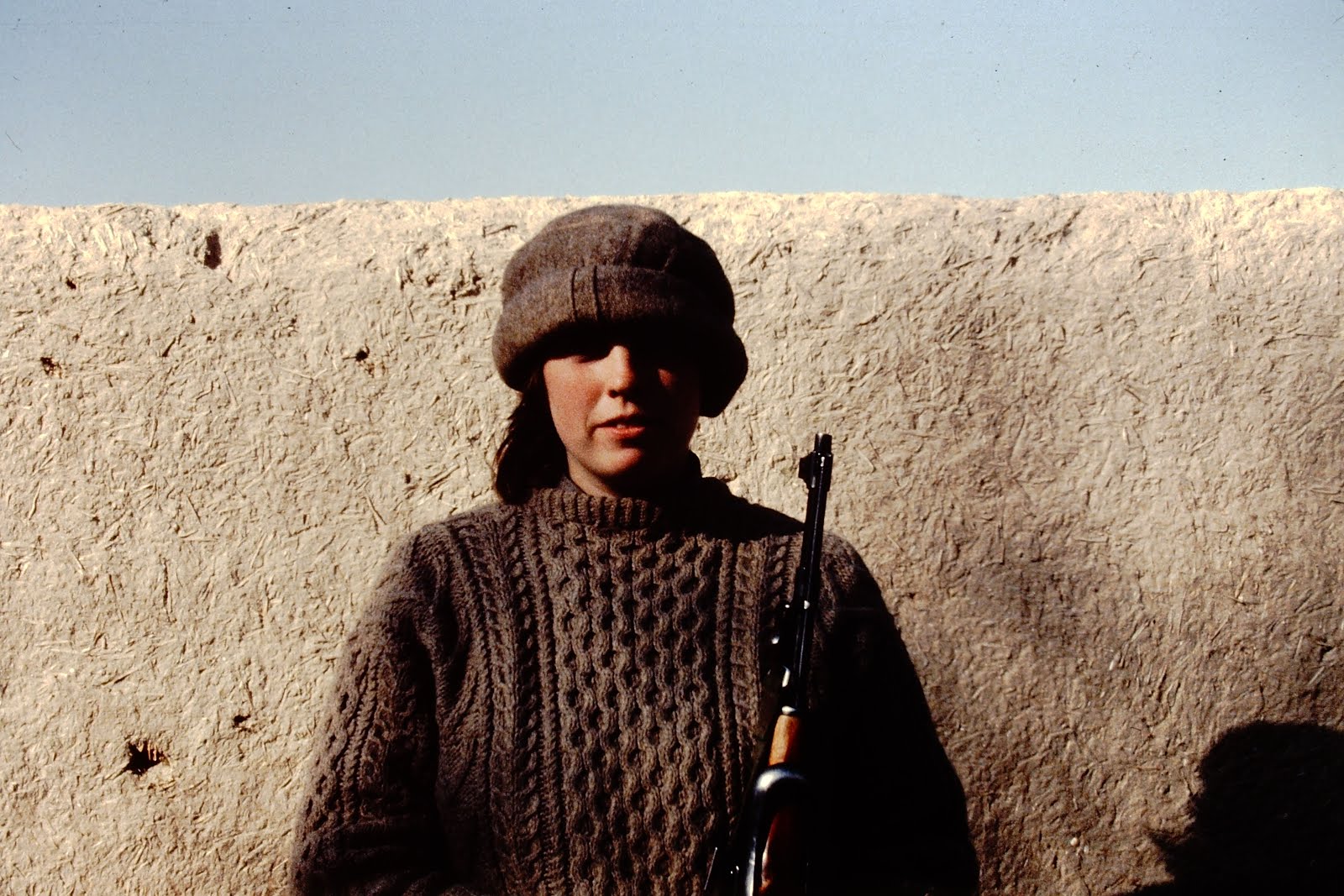
An American woman who spent time in Afghanistan and other warn-torn regions? Who loved both men and women? Who sought a spiritual path? I knew I had to read her book, My Journey Through War and Peace: Explorations of a Young Filmmaker, Feminist and Spiritual Seeker, for my Books That Inspire series.  Currently available for pre-order, it’s coming out March 1. I was able to get my hands on an advanced copy and had a lot of questions for Melissa.
Melissa-Burch-01.jpg
Melissa in Afghanistan, 1982
You've had a pretty amazing life. You spent time as a photojournalist in war-torn Afghanistan and the then-U.S.S.R. You were involved in love relationships with an Afghani fighter and, later, a woman artist-activist. Action was a kind of drug that medicated your anxiety. You also talk about using food for a similar reason. How do you deal with anxiety these days?

Now I don’t have anywhere near the level of anxiety I had in my twenties. Maybe I was at a 10-plus then. Now it comes and goes around 1 or 2. So I notice it, sense it, sometimes give a mantra like “Blessings on all beings” then let it go.
 
Why do you think you have less anxiety now than you did in your twenties? What would you say to your younger self?
 
Lots of emotional and spiritual work. And doing what feels right. Joseph Campbell said "follow your bliss." I did this, even when it didn't feel blissful after I chose it! I navigated my own path in life, didn't follow anybody else's idea of what success is. I would tell all 20-year-olds to do what feels right—and teach them how to pay attention to their senses in their bodies so that they can start having a trustworthy feedback loop for life.
 
In the book, you write about affairs you had while you were engaged to George. You've now been married to him for 25 years. Did you worry about revealing those things to him and/or anyone else? What does George think of your book?
 
He knew from the beginning. We’ve always had a very transparent relationship. He’s been a big fan and supporter since the beginning when it was at the shitty first draft stage. He read all the drafts except the final final version! He says he loves it.
 
Melissa and George in Tinos, Greece, where they now live.
 
When you were in Pakistan in your twenties, you had an ecstatic awakening, a kind of a merging with (or sudden awareness) of the Divine. Why do you think that happened at that time?

I think being out of normal routine, adrenaline, and I think I had a born leaning (in homeopathy it would be called susceptibility) to mystical experiences.


Do you still get "shot with a blissfulness" at surprising times?

Yes, now there is more knowing of the experience then the dramatic first time.

I was especially struck by the scene in Afghanistan where instead of being afraid of death in one dangerous situation, you felt peacefully accepting of it. Why do you think that happened?


I think part of it is adrenaline, the other is there is often a pause, a peacefulness others have shared in near death experiences. My theory is that the right brain kicks in. Maybe it’s a form of survival, or maybe again my susceptibility.


Interesting you’d say this because that calmness came over me—after the initial terror—when I was having a seizure caused by a brain tumor in my right hemisphere. So, do you still have that type of relationship with mortality?

Even more so. I took 5-MeO-DMT for my 50th birthday. As described in this article about the shaman I worked with, it’s a “spiritual medicine from the Amazon, used shamanically by indigenous peoples there to contact the spirit world.” I never really did drugs—once pot at a party in high school and hashish on the border of Afghanistan, and didn’t feel anything both times. But with 5-MeO-DMT I experienced an intense going into a tunnel of light and merging with an intense energy source beyond anything I could imagine or had experienced before. I was that drop in the ocean of energy, and there was me like a garment I could put on, comforting and familiar. This gives me a deep insight into what death could be.


Now that you had such an experience, does it make you want to do the drug again?

No, it was really a one-time thing, truly intense and lesson learned!


What do you wish Americans knew about Afghanistan today?

We are causing extreme suffering over there. The invasion, bombings, drones, torture are hurting people.

The book also deals with your time after Afghanistan. I enjoyed reading about your creative life in New York, where you and a group of women decided to work together to make art and independent films with complete freedom of expression—beholden to no gatekeepers. Can you say more about where you stand with this notion today?

I think writing has a similar freedom. It’s low cost and a way to get out ideas quickly and with depth. I’m also interested in the collective process. I lived in community most of my adult life. I’m interested in both the challenges and benefits of working together and how to make that work better, with more diversity and authentically.

What advice would you give to people who want to write a memoir?

I think journal writing is the best place to begin and then see where that leads. Write everything, all the memories. For my second memoir I was more organized. I typed and wrote on index cards every memory/story and then saw what themes appeared and how it all connects.

Melissa Burch is an author, filmmaker, producer and former war journalist for the BBC and CBS. She is also a spiritual practitioner. For more information and a special gift visit www.melissa-burch.com
 

Tuesday, January 26, 2016

Two Missing Breasts...and She's Never Loved Her Body More.

When I saw Darryle Pollack's Ted Talk about what she learned from life as a result of having cancer and a double mastectomy, I knew I had to talk to her for my "Books That Inspire" series. 
 
The title of her talk and book--I Never Signed Up for This: Finding Power in Life's Broken Pieces--reflect her belief that that we can learn a lot from life's unexpected struggles.
 
 
Darryle, you say, "Chasing perfection is a prison. It's a mindset that narrows your vision and takes away your freedom to be the artist of your own life." How did you come to learn this? How can people break out of that prison?
 
I came to learn this lesson from having cancer, which forced me to see the futility of trying to have perfection in any area of life. Not that I’m recommending cancer as a teaching tool.
 
Experience is a tough teacher, sometimes the only teacher that gets through to us. I sure wish I had figured out an easier way to learn and break out of the prison of perfection. I think a better way to break out of this mindset is switching over from seeking perfection to seeking perspective. One suggestion for how to start is simply to have gratitude.
 
The title of your book is I Never Signed Up for the This. Why did you choose this title?
 
This was also the title for my blog, which I started in 2008. I often say I chose the title because of all the times in my life I’ve said those words. I wasn’t entirely joking, and I also felt most people would relate to what I meant--that life turns out to be nothing like we imagine.
 
The subtitle is "Finding Power in Life's Broken Pieces." This metaphor comes from your art work. Can you explain the connection?
 
I was never artistic.  I had no talent or interest in art most of my life. That turned out to be another lesson from cancer. 
 
I couldn’t find anything to help me cope with all the stress and fear. One day, I happened to take my son to paint a plate at one of those little do-it-yourself pottery studios, and I painted with him. It was amazing for me. This activity I’d stumbled into was the first thing I'd done that actually allowed me to forget about cancer for any amount of time. I wasn’t good at it, trust me.  But focusing on the art and the colors, and just being there helped me relax.  So I started going there. Constantly.
 
Painting on ceramics, inevitably I broke something. I used the broken pieces of tile to make a design around a mirror, and pretty soon I had a new addiction. Mosaics.
 
I became completely obsessed with making mosaics, and one day I finally figured out why mosaics had such a special connection for me. I was picking up broken pieces and putting them together to make something beautiful, different from what I started with. That was the exact same thing I was doing with my life. 


When I found out I had a brain tumor, I realized I can't heal what I don't love--and that I'd spent way too much time berating my body. I had taken it for granted, and suddenly I was flooded with appreciation for it. You went through something similar. Can you talk a little about your journey with your body? 
 
Like so many women, I struggled over my weight, and I never felt thin enough. Even when I was thin, I felt fat. When I looked in the mirror, I never saw what was really there—a pretty great body.
 
And then I got cancer. During chemotherapy, I had no appetite and couldn’t make myself eat.  Every day I got on the scale and the number kept going down. Pretty Ironic. This was what I had wanted all my life. To be too thin. Now even I could see it. Only now I realized, this wasn’t what I wanted. It was scary.
 
One day I looked in the mirror at that skinny body and I promised myself if I survived, I would never complain again about being too fat and I would love my body no matter what.
 
All these years later, I have two missing breasts and I’m nowhere near thin and I’ve kept that promise. I’ve never loved or appreciated my body more than I do now. Yet another lesson from cancer. 
 
What would you tell your younger self?
 
Be kinder.  Don’t be so hard on yourself. Don’t make decisions based on what other people say or think. Trust yourself and your instincts. To discover and become your authentic self, no one knows what you need or who you are better than you.
 
What advice would you give to anyone who wants to write a memoir?
 
Do it.  I’m a big believer in the value of our stories.

Author, artist, and activist Darryle Pollack is a twenty-year survivor of stage III breast cancer who uses her experience to inform and inspire others. Darryle's writing has appeared in the Huffington Post. A former TV newscaster and journalist, Darryle is the co-founder of WHOA Network, an online platform for women over fifty.
 

Thursday, January 21, 2016

Something She Feared Became Home

I sat in Suzanne Roberts' Tahoe home reading her memoir, her sweet dog Ely at my feet. Dave and I were housesitting, while she and her husband vacationed in Thailand. While there, she sat on the beach and read my memoir.

Suzanne and Ely in Nevada's Black Rock Desert
We didn't know each other well; we'd set up the housesit gig through a mutual friend. But there we were, simultaneously learning about each others' lives through our books. Both writers, teachers, and lovers of nature and travel, it seems our connection was meant to be.

Suzanne's memoir, Almost Somewhere: Twenty-Eight Days on the John Muir Trail, chronicles the book title's adventure. She was only in her twenties when she decided to hop on the trail with two friends. In our discussion--part of my Books That Inspire series--she talks about how that decision changed her life.

Why did you title your book Almost Somewhere?

Living in the moment has always been a constant struggle for me, and one of the ways I am most able to be present is in the natural world. The book is about a 28-day hike, and really, when you’re backpacking, you have no choice but to live in the moment, to realize that the going and getting there isn’t the point, that the almost somewhere is a place, too, and really, the most important place of all because that is where you are and that’s all you really have.

When you took off on the John Muir Trail, you had read Muir and thought a lot about his portrayals of nature. In what ways do his visions of the natural world resonate with you? And in what ways is your vision different?

Muir celebrates the natural world, and that resonated with me, then and now. A difference, though, is that Muir doesn’t write about fear very often, at least not his own. Though I am more comfortable now in the natural world than I was in my twenties, there is still that fear—not of nature itself or animals, but of strange men in the wilderness. That’s a fear that most men don’t often think about but is very real for many women.

Regarding fear, you write about how women are taught to hate and fear the outdoors. Can you say more about this? Why do you think this is so—and what can be done about it?

I have thought about this a lot. I wrote a dissertation about how when women try to experience the pastoral landscapes in the eighteenth and nineteenth centuries, it often becomes scary, turns gothic. In early works of literature, it’s clear that “twilight is not good for maidens.” And it is always in the out-of-doors, where bad things happen to the maiden—she is kidnapped or raped or bitten by the vampire. These cultural constructs have entered our consciousness. Things are changing, certainly, but we are still living in the shadow of this long history, where women were taught that the outdoors was no place for a lady.

The best thing we can do, as women, is to go out and explore the wilderness and write our own stories about it. I am much more comfortable in the wilderness [than when I was younger]. I have lived in the Sierra for the past 16 years, so the mountains are now home for me, and home is not scary.


http://www.barnesandnoble.com/w/almost-somewhere-suzanne-roberts/1110856343;jsessionid=D7B563DB5658EBCD751438190325CB94.prodny_store02-atgap09?ean=9780803240124
You write that on the hike "you began to learn that I could not have guessed at the ways in which our tomorrows would take care of themselves." Is this a disposition that has stayed with you?

It’s something I strive for, but I still worry. The true work is always a process, right?

How did your experience on the trail affect the trajectory of the years that followed it?

It changed everything. I moved to Colorado and then Lake Tahoe. I knew that in order to be happy, I would need to spend as much time as possible outside in the natural world.

What advice would you give to people who want to hike John Muir or another long trail?

Choose your hiking companions carefully. Make sure your shoes fit correctly. Don’t bring “just-in-case” items—pack light. Bring lemon drops (my favorite trail treat). Pack out your toilet paper.

What advice do you give to people who want to write memoir?

Read as many books as you can. And read like a writer, trying to figure out what is working and why. Take a class. Join a writing group. Go to readings and conferences and meet other writers. But mostly, stop talking about it and thinking about it, and do it. Thinking about writing a book and writing a book have very little in common.

What would you tell your younger self?

Stop worrying so much—there is no boogieman in the forest; the friends who matter will always love you; the plane will not crash; you won’t even remember his name. If someone you love is in the hospital, get on the next plane. And, you have no idea how beautiful your skin is. Appreciate it—literally and figuratively.


Suzanne Roberts, who is currently working on another memoir, is also the author of four collections of poetry. She holds a doctorate in Literature and the Environment from the University of Nevada-Reno, and currently teaches at Lake Tahoe Community College and for the low residency MFA programs in creative writing at Sierra Nevada College and Chatham. For more information, please visit her website at www.suzanneroberts.net. 

Saturday, December 26, 2015

"You're not crazy. You can survive this, whatever 'this' is."

Joelle in South Africa

So many threads woven through Joelle Renstrom's book (Closing the Book: Travels in Life, Loss, and Literature) mirrored much of my life and writing:
 
* caregiving for her ill father and grieving after he dies
* seeking new aspects of herself in travel
* trying to teach meaningfully
* turning to literature as a guiding force
* developing a spiritual vision.

Her writing is gorgeous; her fine sentences elevate even the darkest subject matter.

One big difference between us is that she's a science fiction aficionado. I wanted to know about that, and other things, in our conversation:
 
I see your book as a coming-of-age at one of the most profound levels: coming to terms with mortality due to the loss of your dad. Is this how you would describe it? What else would you want readers to know about your book?

I shy away from describing it that way. For me, the book is really about making a choice. The choice is about what we do when our lives blow up. The first step is realizing that one has the power to make a choice in the first place. That took me a long time. It seemed that the world had spun out of control and I was powerless to affect anything. While I couldn’t cure my dad’s cancer, I could control my worldview. I could—and did, for a while—embrace a tragic view of the world and of life. But ultimately, who wants that?
 
My book is about ways we can reconcile control and lack of control, since life is a dance between these two positions, and how we can regain agency when it comes to making sense the world and our place in it.
 
Toward the beginning of the book you say, "I'm a great appreciator of terrible beauty, but I can get stuck and wallow in the terrible part for a while before I remember to open my eyes." By the end of the book, you seem to be less of a wallower and more of a wonderer. To what do you attribute this shift?
 
My answer to the previous question gets at this shift, I think, which was about realizing that I don’t have to participate passively in life. There will always be death and sadness—I can always consider myself a victim if I choose to. But I don’t have to position myself as the unwitting recipient of what other people or the universe offers. I don’t need to fix the world or the way things work, which is good, because I can’t. What I can change is my relationship to the world and the levels on which I can understand how I function within it.
 
The most concrete example I have of this shift comes by way of travel. After my dad’s death, I went on a pilgrimage to Scandinavia, my fatherland. I’ve learned that a relatively easy way to change my relationship to the world is to change geographically my location within it, which then catalyzes other, often unpredictable shifts.
 
When traveling, there are things one can’t control, such as whether a bus is late or whether it gets someplace safely, but in order to enjoy travel, one has to let that go and focus on what one can control—where am I going on my walk this afternoon? Will I talk to this person sitting on my right? Will I sit here a moment and think about my dad, even though it means I’ll start crying in a crowded place? Even though they might seem small, making those decisions was a huge step in renegotiating my relationship to the world and to myself.
 
I like how you describe your teaching experiences, how you help students to dig into books. What do you like best about teaching, and what do you find most challenging?
 
I used to work in an office—a few of them, actually—doing a variety of different jobs (a paralegal, a marketing editor, a researcher). But I didn’t like any of them. At the end of the day, I’d ask myself, what good did I do today? And the answer was always none (aside from making it possible to pay my rent). With teaching, I don’t ever have to ask myself that question.
 
The hardest part is when students struggle—academically, emotionally, socially, whatever—and all I can do is to ask whether there’s anything I can do. I can listen if a student needs to talk or help a student who has questions, but other than that, there’s not much I can. Sometimes I want to take students by the shoulders, shake them, and tell them how it is, set them straight. But it wouldn’t work. People have to find their own way, and for teenagers, this can be particularly painful. The hardest part is accepting that I can’t live their lives (or write their papers) for them.
 
Your book made me want to read Arthur Clarke, and I now have Childhood's End on my Kindle. I've read Ray Bradbury, whom you also write about, but not much more one could categorize as science fiction (unless you count Cloud Atlas, which I loved--not the movie but the book). Why do you like (and teach) science fiction, and what books and authors would you recommend?
 
Science fiction blows the doors off the confines of reality. I love literary fiction, but sometimes I get tired of reading realistic accounts of relationships, jobs, and well, reality. There’s really only so many ways to describe the situations we all know so well. Sci-fi offers alternatives to that while at the same time avoiding frivolousness. We get social commentary from sci-fi, we get thought experiments. Even works about robots and aliens are, at their heart, about what it means to be human. I’d rather explore that question from more interesting and unexpected parameters (or no parameters at all).
 
As for recommendations, I’m more about soft sci-fi (sci-fi that focuses on people, rather than on technical specifics) like Bradbury and Clarke. That said, I’m a sucker for Asimov, whose prescient robot works predicted current and future trends in the field. Hyperion by Dan Simmons, Sirens of Titan by Vonnegut (which is and isn’t sci-fi, depending on who you ask), Dune by Frank Herbert, Ender’s Game by Orson Scott Card, Old Man’s War by John Scalzi, Glasshouse by Charles Stross, Frankenstein (the father of them all), anything by Ursula LeGuin, Philip K. Dick, William Gibson, Neal Stephenson, Octavia Butler…I could go on and on.


What surprised (and captivated) me the most was where the book led by the end, to what I would call a growing spiritual awareness. Is that how you would define it? What led to this shift, and why does it matter to you?
 
I don’t think I’ve used the phrase “spiritual awareness” to describe what happens in the end of the book, though that’s certainly an accurate description. “Spiritual” is a buzzword that people generally take to mean something specific, and probably not how I would define spirituality for myself. And while spirituality and religion are in my mind quite distinct, part of the reason I tend to avoid that word is because the two are so often associated. But anything that involves something significant that happens to us on the inside could be called spiritual. A feeling of awe, or peace, or whatever—all of that is spiritual. And by the end of the book, I was able to cultivate those feelings again, which is how I knew I’d be okay.
 
For me, the biggest piece of this transformation was realizing that thinking about something isn’t the only way to interact with or understand it. I’ve always been an analytical person. When confronted with something difficult, whether it’s a problem at work or a conflict with someone else or even death, I tend to lodge that problem in my brain and turn it over and over in an attempt to work it out. But sometimes, that’s not possible. Sometimes, it’s even detrimental.
 
That’s one thing I love about travel—you can’t just sit and think. You have to move. For me, spirituality comes from a shift away from thinking and analyzing and a movement toward simply feeling and being. My brain puts me at the center of the world, which often inhibits my understanding of things on a bigger scale.
 
Joelle in the Azores
 
 
What would you tell your younger self?

Dear self,

You think you have a plan. You think you know what you want from life—you even think you know how to get it. But listen, and don’t take offense at this: you can’t possibly know those things. And honestly, you don’t want to know. What fun would that be?
 
Life will not go according to plan, but ultimately, that’s the best possible outcome. If it went according to plan, you wouldn’t learn much about yourself and the world. If it went according to plan, your seven-year-old worldview and goals would dominate your life, and that’s not really what you want (trust me on this one).
 
Planning doesn’t determine who you are—it’s how you react to all the things you didn’t plan that shapes you. And you’re way, way better at dealing with the unexpected than you think. You’ll see.
 
Is there anything you'd like to add?
 
Death and coping/recovering from the death of a loved one is an intensely personal experience. In a lot of ways, it’s also a selfish one. I don’t—and can’t—write about how my mom, brother, or sister processed my dad’s death. That’s not to say their experiences don’t matter, just that they’re not mine to tell. I don’t want to project my journey onto anyone else or to suggest that what helped me is anyone else’s Rosetta Stone.
 
That said, such narratives do offer invaluable comfort. Joan Didion’s The Year of Magical Thinking kept me sane—if Didion feels like I do, I thought, then I’m not crazy. If Didion can survive this, then survival is possible. Ultimately, that’s what I hope to offer readers. You’re not crazy. You can survive this, whatever “this” is.


Joelle Renstrom is a freelance writer based in Somerville, Massachusetts. She maintains an award-winning blog, Could This Happen?, about the relationship between science and science fiction and her work has appeared in Slate, Full Grown People, Guernica, The Toast, and others. She teaches writing and research with a focus on science fiction, space, and artificial intelligence at Boston University.

Tuesday, December 15, 2015

Healing Yourself


http://www.amazon.com/How-Heal-Yourself-When-Else/dp/0738745545/ref=sr_1_2?ie=UTF8&qid=1441475130&sr=8-2&keywords=how+to+heal+yourself 

In my continuing  series, Books That Inspire, I spoke with Amy Scher, whose new book How To Heal Yourself When No One Else Can is coming out January 8.

What inspired you to write this book?
After healing myself from various physical and emotional challenges, I connected with so many wonderful people who were asking exactly how I did it. While I have a full-time private practice where I help clients one-on-one with this process, I just can’t reach everyone who needs this type of support. Most people understand that healing is possible, even when it doesn’t seem that way; but how to do it can be very overwhelming. I wrote this book so readers could see how I did it, and how they could apply that to their own lives.

"When life kicks your ass, kick back" is your mantra. Why is this idea important to you?
It’s funny because this started off as meaning “kicking back” as in kicking life’s ass right back when it gets tough. But over time, I interpret it more as kick-back as in “relax.” I’ve learned there is a certain balance between forging ahead with conviction to overcome something and letting go so it can unfold. They are both essential to overcoming any obstacle.

You are an energy therapist. What is "energy therapy"?
Energy therapy is a way to access the body’s energy system and its imbalances. Imbalances happen in our energy field long before they turn physical. By going back and working with the body’s subtle energies and correcting any imbalances, we can affect change in the physical and emotional body.
 
What advice would you give to your younger self?
Trust. Let go. Trying to control everything controls you right into being a totally freaked out, unhappy human.


What advice would you give to people about living the life you really want to live?
You have to be who-you-really-are. So many of us fear judgment and upsetting others that we live our lives according to who we think we should be. I have a great quote in my book by life coach Jordan Bach that I think speaks perfectly to this point: “Being yourself is hard. Living with the regret of having lived your life according to other people’s expectations is hard. Pick your hard.”

 
Do you find writing easy or hard? What words of wisdom can you offer to people who want to write a book?
It totally depends on the day. Ha. Sometimes, I sit down and it flows out of me and I can’t stop it. Other times, I find every other thing to do but write. The best wisdom I can offer to others is to write, write, write. Don’t filter or edit as you write. Just write whatever is inside of you. I’d never want anyone to read my first or second drafts because it’s all just brain spew. It takes awhile for some things to look like real "real writing." But it has to start somewhere.

 
In your book, you say instead of getting judgmental about our healing process, it's helpful to trust in the unfolding, to know that what is happening is "necessary for your path." Can you say more about that?
[Thinking this way] can really help us in all aspects of life. We add so much extra craziness to our craziness. If we can just experience what’s happening and not add our own “stuff” to it, we can then just move through it. It’s the judging and analyzing and beating ourselves up that makes mountains out of molehills.

Amy B. Scher, based in L.A., is a leading voice in the field of mind-body healing. She believes that our ultimate wellbeing is born not from self-help, but self-love. She was named one of Advocate's "40 Under 40" for 2013. Visit her website here.
 

Monday, November 30, 2015

"When something seems impossible, do it anyway."

In our nomadic fashion, Dave and I have experienced some incredible natural phenomena in the past few years. Reading Leigh Ann Henion's book,  Phenomenal: A Hesitant Adventurer's Search for Wonder in the Natural World, has made me itch to see more--especially the great migration in Tanzania, the bioluminescence in Puerto Rico, and the Northern lights in Sweden (and to stay in an ice hotel!).

Leigh Ann (right) with reindeer herder Johanna Huuva,
taking a break from sledging on the Torne river near Jukkasjärvi, Sweden
Her book is more than a travelogue; it's a journey into the physical and metaphysical mysteries. For my "Books That Inspire" series, Leigh Ann and I had a chat about how chasing eclipses, migrations, and other natural phenomena around the globe helped to reawake her sense of wonder. 

It's fun that both of our books have "Wonder" in the title/subtitle. What is it about wonder that's important to you?
 
I've written that wonder isn't about finding answers; it's about becoming more comfortable with questions. Wonder is an emotion that can provide perspective and overpower fear.

"Hesitant" is also in your subtitle. What has made you a "hesitant" adventurer? And what might you say to others who are hesitant about exploring the natural world?
 
Popular culture often presents the "adventurous" archetype as someone who is fit, very young, and unencumbered. And I'm not fit, very young, and unencumbered. One of the great discoveries I made while researching Phenomenal is that there are a lot of adventurous people who wouldn't make the cover of a fitness magazine. There are eighty year olds mapping out cave passages, elementary school teachers chasing tornadoes during school holidays.

I used the word "hesitant" because I'm often nervous before trips, but I go anyway. As for advice, I think that depends on the individual and the situation. But one of my new favorite mantras has become: When something seems impossible, do it anyway. Everything about Phenomenal seemed impossible until it wasn't.

 
You didn't set out on a spiritual journey, but your odyssey into the world's phenomenal events developed into one. Why do you think your journey unfolded in this way? How as a spiritual outlook affected your life?

I think my journey became a spiritual pilgrimage because, if you look into nature—via science or your own eyes—you're going to discover deepening mysteries. And spiritual and scientific modes of discussion are some of the only frameworks we have to talk about mystery. As a writer, I'm more artist than scientist, so spirituality dominates my vocabulary.

Thinking in terms of metaphor and mythology has opened me to spiritual discussions, even though talking about mystery—as a layperson in spiritual or scientific circles—opens one to a great deal of criticism. But it's important, I think, to have a variety of voices in dialogue about big questions.

When you start looking into one natural phenomena, you find it's connected to another, on and on. Awakening to that interconnectivity has given—and continues to give me—a sense of spiritual solace.

I noticed in your book that in addition to the sense of vision, you focus a lot on the sense of sound. Why is that?

We're a screen-obsessed culture, and we've started talking about the world mostly via sight-based language. But when you're witnessing a wildebeest migration in Tanzania, you're not just seeing rivers of animals—you're hearing their hooves, you're breathing in the dust those hooves kick up. You're present. I think that growing awareness influenced me, and it's why sound became a character in the book. Of course, hanging out with modern-day shamans and listening to deer-antler organs in the Arctic also influenced things!
 

You quote eclipse-chaser and writer Kate Russo as saying that the "real issue is that people don't feel free. They feel they have to live according to this script that's for everybody." What would you say to people who might want to challenge the script and live more freely?
 
What seems impractical to others might be supremely practical in the context of your life.

What natural marvels have you not seen that you would like to?

The list is ever-growing. If you'd asked a month ago, I might have said I'd like to witness a murmuration, a mass of birds twisting and turning as if a single creature. To do so, I thought I might have to travel to the UK, Israel, or another locale where they're common. But, just last month, I was driving through Kentucky and one appeared right over the highway. One of the enduring gifts of my Phenomenal journey is that I'm always on watch for wonder.


Leigh Ann Henion's essays and articles have appeared widely, and her stories have been noted in three editions of The Best American Travel Writing. She lives in the Appalachian mountains.


Friday, October 30, 2015

"I can remember being happy and wondering if that meant I wasn’t deep."

John Brantingham with Archie Goodboy
The truth is, as human beings we all suffer. But suffering is not the only wellspring of creativity. It's possible to be happy and be a writer, as John Brantingham and I discuss in the latest installment of my Books That Inspire series:

You told me that you hope your book The Green of Sunset offers people a way to focus on small, seemingly unimportant things to help them through difficult times. Can you say more about why you think poetry has the capacity to heal?

So much of what hurts people is self-inflicted. The way we see the world creates our reality. Poetry and the arts in general give us a way to understand the world. The arts are a global conversation, and much of that is a discussion that helps us through the difficult times.

When I was younger, I read novels constantly, and they helped me. One year, when I was going through religious questioning, I read nothing but Brian Moore and Graham Greene, and the two of them let me know that other people had the same kinds of questions that I had, and that they were important questions. At the very least, poetry lets us know that we’re not alone.

There are times in your life when a book, movie, or painting hits you just at the moment when you need it, and in a flash you understand, and that artistic moment stays with you and drives you. Ted Kooser does that to me a lot. Tolkien did that for me when I was a kid. I was hard of hearing and lonely then, and Tolkien gave me a world beyond myself.

And I think that most of the time, it does more than that. It gives us multiple perspectives on the world’s chaos, and I always want my poetry to be healing in some way. It needs to affirm hope and courage above all other things. Art can do that too.

My wife, who is an artist, led me there and I can see the larger conversation of the arts now. It’s beautiful if you follow the right artists. The cynicism and negativity that often drags people down is easy and childish. If people hit my poetry at the right moment, I want them to see the beautiful possibility that there is for them.


Even if you don't normally read poetry, I bet you'll like this book.

In the title poem of The Green of Sunset, you write: "I hope you realize bitterness comes only from moments that stick out in our minds like pustules on a tongue. We chew on them, given them an importance they don't have to have." Do you think being bitter is a choice? Can you say more about how this idea might be important to you?
 
There are people out there who have been through a great deal, and it’s hard to fault them for bitterness, but yes, to some degree I do [think it's a choice], at least it is for me. I wrote this book at a very difficult time in my life. We’d wanted to adopt a child and had gotten to know the mother very well, but it didn’t go the way we wanted it to go. In part it was written for me to remind me that I need to focus on what is beautiful in life.
 
I’d been drinking pretty hard, often a fifth of bourbon in an evening, and had put myself into a kind of spiral. I realized that the way out for me was through the arts and by not focusing on those things that depressed me. I started volunteering and working with other people. I started writing more and reading more. I haven’t ever been to therapy, and I won’t as long as this is working for me.
 
We didn’t need all of the big things as long as we had all of those little things. We had daily art and long walks and the joy of seeing people doing amazing things. There is so much profound joy in the world, I knew that we shouldn’t focus on those couple of moments that had been terrible.
 
The second key to this was being with someone all the time who I feel I can trust and talk to. I don’t know how far the arts would go to keeping me out of my head if I weren’t with Annie. She helps me and I help her to focus on that which is larger than we are. I don’t think people need to be with a husband or wife for this, just around other people.
 

The depressed, suicidal writer is fetishized in much of literary history. Do you think we must suffer in order to write well? How do you think such a view of the artist affects you as a writer--and your students?

It’s difficult to write about writers and poets working on craft. It’s not dramatic, and therefore, bad writing. The alternative then is to write about those things in their lives that make them interesting on a human level. It’s much easier in a class about Hemingway to talk about his suicide or his alcohol abuse. I’m saying this as someone who teaches literature, and I have found myself focusing on those things, which is a mistake that I’ve made in my teaching career.

The truth is that Hemingway did abuse alcohol and he did kill himself, but a lot of people have done that. No one would say that good bridge engineers really should drink and be depressed or they wouldn’t be in the right headspace to construct great bridges, but there aren’t many good movies about bridge engineers. If there were, it would be hard to make them because the internal life just doesn’t translate well into movies, stories, or biographies.

So, I think “fetishized” is right. It’s obsessive and irrational. Yes, a lot of writers have been suicidal because a lot people have been suicidal. The two things do not correspond. That kind of view affected me a lot. I can remember being happy and wondering if that meant I wasn’t deep. What a ridiculous thought.

I’ve had to talk to students about alcohol and drug use. I don’t think that they should stay away from alcohol necessarily, but if they think drinking and drugging is going to make them good writers they’re absolutely in for some trouble. They’re going to stop writing pretty soon.

The relationship of the arts to depression is this: the arts can heal depression to some degree for some people. Of course, I don’t mean clinical depression. However, people absolutely do not need to be depressed to create art.


I love the rhythm of your writing, the way it showcases how the mind wanders and connects. Because you use common vernacular, I'd call your style an accessible version of stream-of-consciousness. Have you always written this way, more or less, or has this style developed over time? What has influenced your progression as a writer? (I feel Walt Whitman in your work...do you?)

I’m someone who believes very much in form, so much so that I wrote a textbook about it, The Gift of Form. The idea behind that book was that each form gives the poet something different, and if you approach formed poetry differently than you do free verse, you will have a unique experience but still gain something from the poetry. The formal poet should stay focused on the line not thinking about the ending of poem and trusting that the form will draw out ideas rather than starting with the idea and trying to force it into the form.

Anyway, that was the idea I had with these poems. Because of the way I was feeling, scattered and unfocused and confused about what the point of my life was, I turned to prose poetry, which focuses on the poetic sentence. It can go on and on and allows a kind of outpouring of emotion.

You flatter me with Walt Whitman. Yeah, he’s a big influence. The most direct influence for this collection was Gary Young, who is my favorite prose poetry writer. I read his collections over and over while writing. Then, there are a ton of others -- Thomas Lux, Tony Barnstone, Gerry Locklin, Sharon Olds, Donna Hilbert, to name a few.

I try to have a completely different style for each collection to capture the meaning and message of the poems and my mood. I just released Dual Impressions: Poetic Conversations about Art with a friend, and I often used a sonnet form. Other times, I’d use single stressed lines to help mute the tone of the poem.

What would you tell your younger self?

I’d tell him to slow down and not work so damn much. I’d tell him to quit his job selling clothing and live without money for a while so he could focus on writing. Also, I’d tell him that all of those feelings of self-loathing are ridiculous. He’s all right.

I’d tell him to get married sooner, to find a way to do that through writing. I’d tell him to read more. I’d tell him to care for his friends more and to listen to jazz.

I’d tell him to take Annie to Europe and live there as long as he can. I’d tell him to take Annie to the mountains and live there as long as he can. I’d tell him to take that internship at that magazine that he passed up and to work at Mt. San Antonio College because he’d really love the people there.

I’d tell him to watch as many movies as he can and subscribe to museums so he can write there. Finally, I’d tell him to find a way to own as many dogs as he can. There’s no joy in this world like a dog’s joy.
 
What else would you like to add?

For the last two years, Annie and I have been volunteering at Sequoia and Kings Canyon National Parks, teaching poetry and art to people in week-long sessions. We arrange it so the students are volunteers and as long as they agree to donate at least one piece of art or poetry, the week and park entrance is free. Some weeks, we backpack. Other weeks, we stay in the front country and work. In any case, it’s an amazing adventure, and anyone reading this can join us. The connection to nature and art is unlike anything you’ve experienced, and we have scientists along to give us insight into what we’re seeing. Please contact me for more information on that, or friend me on Facebook.


John Brantingham is the author of books of several books of fiction and poetry--as well as hundreds of poems, stories and essays. He teaches at Mt. San Antonio College and lives in Seal Beach. He is currently working on a collection of flash fiction pieces with Grant Hier, meant to be the entire history of California from 10,000 BCE until now. He's also writing a poetry collection that explores the natural history of California focusing mostly on Sequoia and Kings Canyon National Parks.Visit his website here, and friend him on Facebook here.